-01-1.png?width=1200&height=238&name=Logo%20-%20Social%20(V001)-01-1.png)
 ·
13 minute read
·
13 minute read
If you're trying to get loan officers to create more video, you've probably heard every excuse in the book.
"I don't like how I sound."
"I'm awkward on camera."
"I'm worried I'll say the wrong thing."
I've heard every excuse a loan officer can give for skipping video. There are exactly ten.
Why Don't Loan Officers Create More Video?
SocialCoach has processed 786,000+ social posts and 24,000+ video projects for mortgage companies. Automated, compliant posting is our foundation. It keeps every LO visible without eating their day, and that layer works.
Video sits on top of that foundation, which is why video is where the friction shows up the most.
And across more than 60 enterprise mortgage lenders and nearly 10,000 mortgage professionals using the SocialCoach platform, the excuses are remarkably consistent.
What's interesting isn't the excuses themselves. It's what they reveal.
In this article, I'll walk through the ten excuses I hear most often, and what each one is really telling you about your mortgage marketing program.
Jump to:
The 10 Excuses | The Human Premium | It Isn't a Motivation Problem | Point-of-creation compliance | What Video Marketing Does + Doesn't | The Real Competitive Advantage | What the Best Leaders Understand | Key Takeaways | Video Marketing FAQs
The Real Reasons Loan Officers Don't Create Video
People assume loan officers avoid video because they're uncomfortable on camera.
Sometimes that's true.
But more often, they're reacting to something else:
- They don't know what to say
- They're worried about mortgage compliance
- The process feels like too much work
- They don't believe it'll actually generate business
The 10 Excuses We Hear From Loan Officers About Video Content
1. "I Don't Like How I Sound."
Nobody does. Seriously. Most of us hear a recording of our own voice and immediately assume everyone else cringes too.
Their clients hear that voice on every call and work with them anyway.
What this excuse is really telling you
Your loan officers have never seen an edited, professionally produced version of themselves.
That's a terrible first experience.
The first raw recording most people watch is full of awkward pauses, bad lighting, weird camera angles, and every tiny thing nobody else would ever notice.
First impressions of yourself on camera are brutal without production help. If that's someone's introduction to video, of course they don't want to do it again.
No capacity to edit videos yourself? We do it for you.
Sure, you can hire an internal video editor who juggles both the company brand and individual LO videos, and has a week-long turnaround time that leaves LOs frustrated.
Or you can use SocialCoach's mobile app with ready-to-record scripts, a teleprompter, and a team of video editors who edit your team's videos within 48 business hours. Check it out here.
2. "I'm not good looking enough."
Borrowers aren't looking for influencers.
They're looking for someone they trust with one of the biggest financial decisions they'll ever make.
Being recognizable and local beats polished and generic.
What this excuse is really telling you
Your video program is accidentally teaching loan officers to compare themselves to creators instead of peers.
They think they're auditioning, instead of introducing themselves.
Those are very different jobs.
3. "I'm awkward on camera"
Everyone is. For about ten videos.
The mistake companies make is expecting confidence before repetition.
That's backwards.
Comfort isn't a prerequisite for video, it's the result of doing video.
Confidence follows repetition. Not the other way around.
What this excuse is really telling you
Your program runs on individual bravery. If it only works for the brave or naturally outgoing loan officers, you don't have a program. You have three volunteers.
The best mortgage marketing programs don't wait for people to become fearless.
They make getting started feel safe.
4. "I can't remember my lines."
Good. Scripts performed word-for-word sound like hostage videos anyway.
Instead of asking your loan officers to memorize 300 words, ask them to answer a question they heard from a borrower this week.
The energy changes immediately.
What this excuse is really telling you
Blank-page assignments almost always fail.
Good prompts almost always work.
There's a big difference between asking someone to "Make a video" vs asking:
"A borrower asked whether rates are expected to come down this year. How would you answer them?"
One creates anxiety. The other starts a conversation.
5. "People will make fun of me."
Maybe. For a week.
My own first-year videos had bad sound and worse lighting.
I still posted them.
And those imperfect videos still started conversations that turned into relationships, referrals, and business.
Nobody remembers your first video – they remember whether you kept showing up.
What this excuse is really telling you
Nobody inside your company is normalizing the awkward stage.
Every loan officer thinks they're the only one who's nervous.
They're not.
Every person creating content has gone through it.
The difference is that some organizations expect that phase and coach people through it.
Others quietly hope confidence shows up before the first recording. It never does.
6. "My deals come from other sources."
Today they do.
But here's what I think gets overlooked:
Referral relationships don't disappear overnight.
They age.
The Realtor you've worked with for fifteen years retires. A past client moves away. A builder changes companies and you lose touch.
Meanwhile, the next generation of borrowers is checking you out in their feed before they ever call.
What this excuse is really telling you
Your company still measures social like a marketing initiative instead of a relationship strategy.
So LOs deprioritize it. That's rational.
If loan officers think social is optional branding instead of pipeline protection, they're making a rational decision by putting it at the bottom of the list.
Which is why the lenders who see success don't ask loan officers to choose between referrals and social.
They show them how social strengthens the referral relationships they already have.
The goal isn't to replace relationships. It's to stay present between them.
7. "I tried it and it didn't work."
This one usually means: "I made three videos." Spread over two months.
Nobody plants a tree on Friday and complains about the lack of shade on Monday.
Social selling compounds. It doesn't convert on contact.
What this excuse is really telling you
Your program never set a cadence or a timeline for success. So LOs quit in the dead zone, right before results show up.
8. "I don't have enough followers."
Follower counts matter less every year.
Feeds run on interest algorithms now. Relevance gets reach.
You don't need 10K followers. You need one borrower in your market who was already wondering about the exact question you answered today.
What this excuse is really telling you
Nobody has taught your producers how distribution works in 2026. They're optimizing a 2015 metric.
Stop emphasizing vanity metrics, and start showing what real results look like.
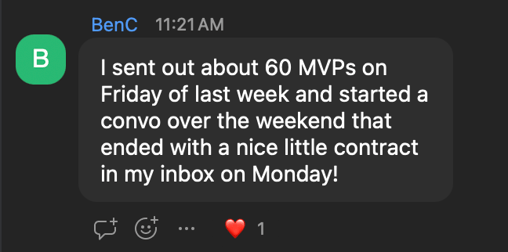
See how to improve your team's outreach
with SocialCoach's My Video Page (MVP) feature.
9. "I hate social media."
Fine. You don't have to love a channel to work it. LOs don't love updating their CRM either.
They still do it.
Not because they enjoy it, but because it helps them build their business.
What this excuse is really telling you
Your video workflow takes too many steps, without results to make it feel worth it.
People do more of what takes less effort. That's not a character flaw. It's just human nature.
10. "I'm worried I'll say the wrong thing."
The only excuse I fully respect. It's rational.
Mortgage marketing sits under real regulatory weight:
-
Advertising rules and trigger terms
-
UDAAP
-
Fair lending
-
RESPA
-
Disclosures
-
Record retention
-
The FFIEC's social media guidance on top.
If a loan officer hesitates because they don't want to create compliance problems, they're not lacking confidence.
They're making a reasonable calculation that prices risk correctly.
What this excuse is really telling you
This one was never an LO problem. It's a compliance architecture problem.
And it's probably the single biggest participation killer we see across enterprise lenders.
Which is why we built point-of-creation compliance into SocialCoach.
Instead of asking loan officers to record a video, submit it, wait for review, then make edits and repeat the process, we screen content while it's being created.
Potential issues are flagged before publication, not after.
That doesn't eliminate the need for compliance oversight. No platform can promise that.
But it dramatically reduces the friction that causes most loan officers to stop creating video after the first few attempts.
That's a very different system.
So there's the list. Now here's why beating these excuses matters more right now than at any point since I started this company.
The Human Premium
Here's the idea I keep coming back to.
AI made content production close to free. Anyone can generate a decent post in seconds. So everyone does. Feeds are filling up with competent, polished, interchangeable content that no actual human stands behind.
Your borrowers have noticed.
Gartner surveyed 1,539 US consumers. Half said they'd rather give their business to brands that don't use generative AI in consumer-facing messages, ads, and content.
And 68% said they frequently wonder if the content they're looking at is even real.
That's not just talk. The Nuremberg Institute for Market Decisions ran a controlled experiment.
Same exact ad. Half the participants were told a human made it. Half were told AI made it. The AI-labeled version scored lower on appeal, credibility, and emotional pull.
I call it The Human Premium.
The more generic content floods the feed, the more a verifiable human expert is worth.
And I'm not making the raw-versus-polished argument.
We professionally edit thousands of videos. A well-edited video can still feel completely human.
Polish isn't the enemy. Generic isn't even the enemy.
Generic content has a job: it keeps you consistently present, and automation does that job well.
The problem is stopping there.
A video of a real LO with a real opinion on this week's rates in their county can't be commoditized. The trust sticks to the person, not the production.
Borrowers don't pick loan officers off a rate sheet. They pick the person they feel like they already know.
Video builds that feeling at scale, before the first phone call.
That's the opportunity. Here's why most lenders can't capture it.
If Only 3% of Your Loan Officers Create Video, It Isn't a Motivation Problem
Here's the part that stings.
You've probably got most of the pieces. Social accounts. Content. Marketing staff. A compliance team. Maybe automated posting keeping every LO visible, which is the right base layer. And still, video participation rounds to the same three extroverts who would've done it anyway.
Almost every marketing leader I talk to opens the conversation half apologizing for that number.
The companies that consistently get broad participation don't magically hire more charismatic loan officers.
They remove friction.
We've found that friction almost always shows up in the same three spots every time:
-
Creation is too hard – blank pages, no prompts, no editing help
-
Compliance comes too late – Record, submit, wait, redline, repeat. Nobody survives that loop more than twice.
-
Video participation isn't measured – you can't close a gap you can't see.
The fix is the mirror image. Start creation from a prompt, never a blank page. Move compliance to the moment of creation, not a review queue. Measure participation so you know who needs help.
That's the whole playbook. The rest of this article is how each piece works.
Point-of-creation compliance
The Human Premium explains why LO video keeps gaining value. Point-of-creation compliance is how you get it without lighting your risk profile on fire.
The old model: LO records. Submits. Waits. Gets redlined. Re-records. Waits again.
Your compliance team isn't trying to kill participation. Friction after creation kills it anyway.
Flip the order.
Configure controls up front around your policies and your risk tolerance. Screen content as it's created, including what's spoken on video. Flag potential issues before publication. Clean content moves. No queue.
Quick word for your compliance team, and they'll appreciate this:
No system guarantees compliance. It's impossible to catch everything. What SocialCoach does: moves the control earlier, flags problems when they're cheapest to fix, and replaces an unwinnable manual backlog with configurable oversight.
Our data shows the scale. 786,000+ posts on our platform. About 103,000 flagged for potential compliance attention before publication. One in eight.
Most flags aren't violations. Just language that needed a second look. But every one of those reviews happened before the content went public, not after.
And about 1,200 posts got stopped from publishing under their companies' rules. After-the-fact review was never going to hold at that volume.
What Video Marketing Does (And What It Doesn't)
"Post videos, close loans" is not how this works. If you've been burned by that pitch, good instincts.
The real path: Exposure -> familiarity -> trust -> inbound conversations and referrals -> loans.
It compounds. It doesn't convert on contact. Give it months.
The numbers match that shape.
First Commonwealth Bank studied their own LOs, and the average LO on social attributed a 12% year-over-year revenue increase. LOs doing video? 22%.
Straight talk on that number. Self-reported attribution, not a lab study. Still a 10 point gap inside one bank. Same market. Same rates.
One producer: Tim Murphy at AnnieMac. Veteran LO, rural Maryland. Two videos a week. Leads around month two. After month 6, 2-3 closed loans a month attributed to social.
And the enterprise proof. AnnieMac had one social media manager spending eight hours a day supporting about 100 LOs. Same role now supports 800+ in about 15 minutes a day.
The excuses are human. The fix is a system.
The Real Competitive Advantage Isn't AI. It's Your People.
Beating ten excuses one LO at a time doesn't scale. The system has five jobs. Miss one and the program dies there.
Most companies try to coach their way out of what is really a systems issue. They ask managers to encourage people more. They ask loan officers to be more consistent. They celebrate the handful of people who figure it out on their own.
None of that scales.
From what we've seen, every successful program does five things well.
-
It removes the blank page. Loan officers don't have to wonder what to talk about because they're working from prompts, scripts, and real borrower questions.
-
It makes content personal. Every video still feels like it came from the loan officer, not the marketing department.
-
It builds compliance into the workflow. Confidence comes before publishing, not after.
-
It distributes content everywhere it needs to go. One recording can power social media, one-to-one video messages, email campaigns, and personalized video pages without creating more work.
-
It measures participation, not just performance. Marketing leaders can see who's engaging, managers know where coaching is needed, and executives can connect activity to business outcomes.
That's the system we built at SocialCoach.
Not because loan officers needed another video tool.
Because marketing leaders needed a repeatable way to help hundreds of loan officers consistently show up as trusted experts.
That's a very different problem to solve.
What the Best Mortgage Marketing Leaders Understand
If you're leading marketing, sales, or enablement, here's where I'd start.
Count how many of your LOs published a video last month.
If the number embarrasses you, don't blame the LOs. Fix the friction, or come talk to us and we'll help do it for you.
And if you're a loan officer reading this...don't overthink it.
Pick one borrower question someone asked you this week. Answer it in 45 seconds. Post it. Then do it again next week.
You don't need a perfect video.
You need enough videos for people to remember you're the person who consistently shows up with helpful advice.
The lenders who win won't be the ones creating the most content.
Content is cheap now. Your people are the moat.
Key Takeaways
- Most loan officers don't avoid video because they lack confidence – they avoid friction
- The biggest barriers to video adoption are content creation, compliance, and inconsistent coaching
- AI has made content easier to produce, but it has also increased the value of authentic human expertise
- The highest-performing mortgage marketing teams remove friction instead of relying on motivation
- Great video programs don't depend on a handful of charismatic loan officers. They create systems that help the entire team participate.
- The long-term competitive advantage isn't producing more content. It's helping more trusted experts consistently show up where borrowers and referral partners are already paying attention.
Want to know what's working for other top lending teams?
The Mortgage Marketer is a collaborative conference built exclusively for mortgage marketing leaders who want to bring back proven frameworks that actually move the needle.

Over three days in Laguna Beach, you'll join a small group of peers to tackle the challenges every lending team is facing right now:
-
Increasing loan officer adoption
-
Proving marketing ROI to leadership
-
Using AI without losing authenticity or compliance
-
Building marketing programs that drive measurable business growth
You'll leave with practical frameworks, real-world playbooks, and candid conversations with other leaders solving the same problems you are – and what they're using that's actually working.
| Date | September 9-11, 2025 |
| Location | Surf and Sand Resort, Laguna Beach, CA |
Reserve your seat at The Mortgage Marketer →
Important note: We're capped at 75 seats. Once full, registration closes.
Frequently Asked Questions About Loan Officer Video Marketing
Why don't most loan officers create videos?
Most loan officers don't avoid video because they lack confidence or motivation. In our experience, the biggest barriers are unclear topics, fear of compliance issues, time-consuming workflows, and uncertainty about whether video will actually generate business. When companies remove those sources of friction, video adoption typically increases.
Does video marketing actually work for loan officers?
Yes, but not because video is inherently better than every other marketing tactic.
Video helps borrowers and referral partners get to know the person behind the mortgage process. It builds familiarity, answers common questions, and creates trust before the first phone call. The strongest results come from consistent educational content, not one viral video.
Does social media actually generate mortgage loans?
Yes, but not the way most pitches claim. Consistent video builds familiarity and perceived expertise, which turns into inbound conversations and referrals over months. In one bank's internal study, LOs using social attributed a 12% year-over-year revenue lift to it. LOs doing video attributed 22%. Individual producers posting consistently commonly report closed loans attributed to social within 6 months.
Why do enterprise social media programs have low adoption?
Most programs solve for content when the real constraints are workflow, compliance friction, and support capacity. Content alone doesn't change producer behavior. The usual failure points: no path from automated presence to personal video, after-the-fact compliance review that adds days of waiting, tools with too many steps, no stated cadence or timeline, and marketing teams that can't manually support hundreds of producers.
How can mortgage companies increase loan officer video adoption?
The highest-performing mortgage lenders don't rely on motivation alone. They make video easier to create by providing prompts, simplifying editing, building compliance into the workflow, automating distribution, and measuring participation across the organization. Many lenders use multiple tools, but top lending companies are looking for platforms like SocialCoach that combine it all into one easy-to-use platform.
How often should loan officers post videos?
2-4 videos a week are recommended, held for at least six months. Results follow a compounding curve, but long-term consistency provides better results than bursts of high volume posting. Producers commonly report lead activity within 2 to 3 months and attributed closed business by month six. Programs with no stated cadence lose producers in the gap before results appear.
What should loan officers talk about on video?
The best-performing videos usually answer questions borrowers are already asking.
Topics might include:
- Current mortgage rates and what they mean
- Down payment assistance programs
- The mortgage pre-approval process
- Dispelling common myths
- Local housing market updates
- First-time homebuyer questions
- Common closing costs
- Refinancing considerations
View more post ideas here: 45 Mortgage Social Media Post Ideas for Loan Officers [with Examples].
How do mortgage companies keep loan officer videos compliant?
The emerging best practice is point-of-creation review with platforms like SocialCoach that screen content (including spoken video) against company-configured rules before publication instead of auditing after. Mortgage social content can touch advertising and trigger-term rules, UDAAP, fair lending, RESPA, disclosures, and record retention. Regulators' expectations for social media oversight sit in FFIEC guidance. Earlier controls cut both risk and the review friction that suppresses LO participation.
How can lenders scale video across hundreds of loan officers?
Remove the three bottlenecks that cap participation: creation friction (prompts, scripts, and editing support instead of blank pages), compliance waiting (point-of-creation screening instead of manual queues), and marketing capacity (automated workflows instead of hand-holding each producer). With that infrastructure in place, SocialCoach has seen one social media manager go from supporting about 100 LOs to 800+.
Does AI make loan officer videos less valuable?
The opposite. As AI makes it easier for anyone to generate content, authentic human expertise becomes more valuable. Borrowers don't choose a mortgage lender because a caption was well written. They choose the loan officer they trust to guide them through one of the biggest financial decisions of their life.
That's why authentic video has become more important, not less.
Ready to Help More Loan Officers Create Video?
If your team is hearing the same excuses we covered in this article, the answer probably isn't another motivational speech.
It's a better system.
SocialCoach helps mortgage lenders, banks, and credit unions remove the friction that keeps loan officers from creating content consistently. From AI-assisted prompts and professionally edited videos to point-of-creation compliance, automated distribution, analytics, and adoption reporting, everything is designed around one goal:
Helping more loan officers consistently build trust with borrowers and referral partners—without creating more work for marketing.
Schedule a Demo
See how leading mortgage companies are increasing video adoption, improving borrower communication, and turning video into a scalable competitive advantage.
📚 Related Reading
-
From 20% to 93% Rep Adoption: How One Bank Turned Social Media Into a $2M Revenue Channel
- Why Your Sales Team Won't Post on Social Media (And How Marketing Leaders Can Fix It)
- Fear to Framework: What the RESPA Social Media Debate Gets Wrong — and How to Actually Stay Compliant Online
-
How to Measure Social Media ROI for Mortgage Teams: A 3-Layer Framework