-01-1.png?width=1200&height=238&name=Logo%20-%20Social%20(V001)-01-1.png)
 ·
14 minute read
·
14 minute read
Let me start with a scooter.
I bought one at the beginning of the pandemic. We all needed something fun to do. Then life went back to normal and it sat in my garage for a few years, doing nothing.
 Then California raised my registration fee again. (Thank you for that.)
So I had a decision to make. Use it, or sell it.
I went out to the garage and, of course, the battery was dead. So I Googled how to restart it.
And the search gave me two options: Written instructions, and a video.
I picked the video. Didn't even think about it.
Ten minutes later the scooter was running again. Easy. Honestly, kind of fun.
Now here is the question I want you to sit with for a second.
I can read. The written instructions were right there, free, with the exact same information in them.
I picked the video anyway. Why?
Because watching a person do the thing is faster and clearer than reading about it.
We've all done the same thing. Think about the last time you tried to fix or put something together at your house. Did you read the manual, or did you look it up on YouTube?
You already know your answer.
Hold onto that. It's the whole article.
Jump to:
Where Borrower Communication Breaks Down | The 30-Second Test for Mortgage Emails | Making Complex Mortgage Communication Easier | The Confusion Tax: What Poor Communication Costs Mortgage Lenders | Why Mortgage Video Programs Fail to Scale | Mortgage Video Marketing Results | 5 Mortgage Borrower Emails to Update First | The Future of Borrower Communication | Key Takeaways | Video Marketing FAQs
Why Mortgage Borrower Communication Breaks Down
Your borrower is buying a house. It's the biggest amount of money they will ever agree to.
They've done this maybe twice in their life, so they're not experts at it. Which makes them nervous.
So how do we explain it to them?
We send an email about their conditions. An email about their Loan Estimate. An email about underwriting.
Long ones. With bullet points, because we are trying to be helpful.
We hand them the manual, and expect them to be able to follow it. Then we wonder why they feel lost, frustrated, and confused throughout the process.
Your Borrowers Probably Read the Email. They Just Didn't Understand It.
Here's what happens next, and you've probably heard it happen in your own building.
A borrower sends the wrong document. Or asks a question the email already answered. Or just doesn't reply at all.
And somebody on your team complains: "They don't read anything we send them."
I want to push back on that, gently.
They read it. They just didn't understand it.
Those are two different problems. And only one of them is the borrower's fault.
The 30-Second Test for Mortgage Borrower Emails
Brandon Durham sent me this one.
Look at it before you read another word.
30 seconds. The way you actually read email – on your phone, between two other tasks.
.png?width=681&height=383&name=image%20(24).png)
Now close it and answer three questions:
- What does this email ask you to do?
- By when?
- What happens if you don't?
Take a second with that. (Don't scroll back up – that's cheating.)
Here's the part that should bother you:
This is not a borrower email. This went to department leads at a mortgage company. Professionals. People who work in this industry every day. People like you.
And there's exactly one thing being asked of the reader in the entire message.
Submit two or more people from your department for the pilot by June 26.
That's it. That's the whole ask.
It's sitting in the third section, under a heading about pilot group details, wedged between the purpose of the initiative and the reasoning behind the go-live date.
Around 300 words. Five headings. Ten different dates. Emojis as section markers. Every line centered on the page, which somehow makes it even harder to find anything.
Now watch Brandon say the same thing. 🎥 ➡️
See if you can answer the three questions this time around.
Not close, is it?
So here's the question I actually want you to sit with:
If that email can stump a room full of mortgage professionals, what do you think your condition request does to a first-time buyer reading it at nine o'clock at night?
Can't see the video? Click here.
Why Video Can Make Complex Mortgage Communication Easier to Understand
Brandon did what the email couldn't – he led with the ask instead of burying it. He said the date out loud. He told you which parts you could ignore.
But there's something else going on underneath that, and it's worth calling out.
Your brain has two doors for taking in information. One for what you hear. One for what you see. Each door only fits so much at a time.
Reading an email uses one door. Every word, every number, every action item has to squeeze through the same opening. All while you're also trying to remember what the second paragraph said.
Watching a person explain something uses both doors. Their voice goes in one. Their face and the document on the screen go in the other. Same information. Half the traffic.
Researchers have studied this for decades. Richard Mayer's work on multimedia learning is the best known, and the finding has held up across hundreds of experiments: people understand more from words and pictures together, than from words alone.
They also understand more from a picture with someone talking over it than from that same picture with text sitting next to it.
Which is exactly what my scooter battery proved. Two options, same information – but my brain picked the easy door.
Why Hearing a Real Person Explain Something Changes Understanding
I want to tell you about a study that changed how I think about this.
Researchers at Princeton put two people in brain scanners. One told a story. The other listened. They published it in PNAS under the title Speaker-Listener Neural Coupling Underlies Successful Communication.
While the listener listened, their brain started doing the same thing the speaker's brain was doing. The two brains lined up.
Three things they found:
- The brains lined up when the person understood.
- When the person stopped understanding, the lining up stopped.
- The more the brains lined up, the more the listener understood.
Think about what that means.
Understanding is not you handing information to somebody. It is two brains getting in sync. And they get in sync through a voice and a face.
That's why sitting across a desk from somebody has always worked better than mailing them a letter. Everybody in this industry already knows that. We just thought it required a desk.
It doesn't. Your brain treats a person on a screen like a person.
So your loan officer can show up for 40 borrowers before lunch. Without driving anywhere.
Does Video Work for Older Mortgage Borrowers?
I hear this constantly, so let's deal with it.
The median home buyer today is 59 years old (a record high), according to the National Association of Realtors. First-time buyers are only 21% of the market, which means repeat buyers are the other 79%, and their median age is 62.
So no, your borrower is not on TikTok all day.
But go back to my garage. When your 59 year old borrower has a dead battery, or a dishwasher that will not drain, are they sitting down with the manual?
Or are they pulling up a video, same as you and me?
Watching somebody explain something is not a young person's habit. It's a human habit. It's just never been easy for a lender to do it at scale until now.
The Confusion Tax: What Poor Borrower Communication Costs Mortgage Lenders
This is the part that turns a customer experience conversation into a revenue conversation.
Every time a borrower doesn't understand something, somebody in your company pays for it with their time.
Follow one confusing email all the way through:
-
The borrower doesn't respond, so somebody follows up
-
Borrower sends the wrong document, so somebody reviews it and asks again
-
The borrower calls this time, and your LOA spends fifteen minutes explaining what the email already said. The loan officer gets pulled in. The agent calls, asking what's the hold up. The file sits three extra days.
Now multiply that by every loan in your pipeline.
I call it The Confusion Tax. You never see it on a report, but it shows up as headcount.
And look at the margin you are protecting. The Mortgage Bankers Association's second quarter 2026 performance report shows lenders spent about $10,936 per loan to make about $973 in profit.
Read that again.
$11,000 dollars out. $1,000 back.
At those numbers, extra phone calls are not an annoyance. They are your margin.
And I want to be careful here, because there's a wrong conclusion sitting right next to the right one. The wrong conclusion is "we have no money."
The right one is that you don't control gain-on-sale margin. The market sets that. You control touches per loan.
Cost to serve is the only lever in that equation with your name on it.
And this is exactly where good lenders separate from bad ones. MBA's own analysis found that in 2025, the top 20% of lenders averaged $10,074 in production expense per loan while the bottom 20% averaged $12,603.
Since 2020, that gap has averaged $2,626 per loan. Before 2020, it was $941.
Nobody closes that gap with a better email template.
How Borrower Confusion Creates More Work for Mortgage Operations Teams
There's one more cost, and it's quieter.
When borrowers keep getting confused, your operations team starts to believe something about borrowers. That they're careless. That they don't pay attention. That they're difficult.
That belief is wrong, and it wears people down.
Your processors start to dread the phone. Your LOAs get tired of explaining the same thing over and over. And they conclude the problem is on the other end of the line.
It's not. They inherited a format problem they did not create.
Fix the format and you aren't just helping borrowers – you're making the job better for the people doing it.
How to Use Video Throughout the Mortgage Loan Process
Most people in mortgage only think about leveraging video to attract new customers. That's the smallest part.
Before the loan. Somebody who has watched your loan officer share videos on social media shows up to the first call already trusting a person. You start twenty minutes ahead.
During the loan. This is where the money is. A short video when the file hits underwriting. A screen share walking through the Loan Estimate. A doc request where they can actually see what the document looks like. Understanding makes people calm. Calm people do not panic-call three other lenders at 9pm.
After the loan. People remember people. Somebody who saw their loan officer's face for six weeks remembers the human being behind the transaction. Somebody who got 14 emails remembers a process (and likely a frustrating one, at that).
Only one of those sends you a referral.
Same person, same information. Different format. Completely different experience.
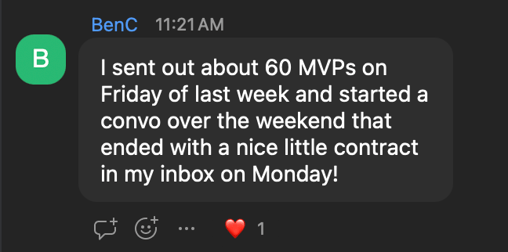
See how to improve your team's outreach
with SocialCoach's My Video Page (MVP) feature.
Why Most Mortgage Video Programs Fail to Scale
At this point, the typical advice shows up: "Tell your loan officers to start making videos."
That advice is exactly why video died at your company the last time you tried it.
And it didn't die because loan officers are lazy, or because the idea was wrong.
It died for three structural reasons, and none of them get solved by buying seats.
Reason 1: You made video dependent on individual motivation
Think about what "tell them to make videos" actually asks for.
300 people, each having to decide independently, on a busy Tuesday, in the middle of a rate lock, to stop and explain something on camera. And then deciding it again tomorrow. And every day after that. Forever. With no help.
Maybe 12 of them will. The other 288 will not.
That's not a program. That's a good habit that 12 people have. And in 18 months, somebody pulls the usage report, sees 12 names, and cancels the contract.
Reason 2: Compliance didn't say no. Compliance said "in a few days."
This is the one nobody talks about, and in mortgage it's the real killer.
Your loan officer records a video about a rate environment. It goes into a review queue. Three days later it comes back approved.
Compliance did their job. Compliance was not the villain. But the message was about this week, and now the video is stale, and the borrower already called somebody else.
So the loan officer stops trying. Not because they were told no. Because approval arrived after the moment that mattered.
A review queue is not a compliance program in a real-time channel. It's a delay mechanism that quietly teaches your best people not to bother.
The fix is not faster (or more) reviewers. It's checking the content when it's made, so the answer arrives in seconds instead of days, and the only thing that reaches a human reviewer is the small fraction of content that actually needs a second look.
Here's what that volume looks like in practice:
Across the SocialCoach platform, roughly 10,000 mortgage professionals have published 786,402 posts.
About 103,100 of those (roughly 1 in 8), were flagged for a potential compliance issue. 1,215 were blocked outright.
Now imagine 1 in 8 of your company's content causing the rest to sit waiting in a manual queue. That's not a bottleneck. That's a program that ends.
Reason 3: Nobody remembers to send it at the right moment
Say you get past the first two. Your loan officer is motivated and their video is approved.
They still have to remember to send it at the exact right point in a loan, on every file, while managing forty other files.
Human memory is not a delivery system. The video has to be triggered by the loan, not by the person.
How to Scale Personalized Loan Officer Video Across Your Company
Stop asking loan officers to produce videos. Ask them to be in them.
Those are two completely different jobs, and almost every failed video program in this industry confuses them.
Producing a video means deciding what to say, when to say it, whether it clears compliance, and remembering to send it. That's marketing and operations work, which your marketing and operations people are best at.
Being in a video just means talking for ninety seconds. That's the loan officer's job, and something they're good at (most of the time).
Every mortgage video program that has ever worked at scale split those two things apart. Every one that failed? Asked one person to do both.
What that looks like in practice. Marketing builds a video template or page for one moment in the loan. Branded, with a script on a teleprompter and a backup video for anyone who does not record their own. It goes to the entire roster at once. Each loan officer records their own ninety seconds. Compliance gets checked at the moment of creation, not in a queue. Then one link drops into your CRM, and when the loan hits that milestone, every borrower automatically gets their own loan officer's video, not a generic one.
Marketing produces. Compliance clears it instantly. The system sends it. The loan officer just shows up.
It may sound like a lot of work, but that's why we built Super Pages and MVP to make it simple for you. Learn more or book a platform walkthrough here.
Just remember – the delivery model matters more than the vendor. Get that wrong and no tool will save you.
Mortgage Video Marketing Results: What Happens When Video Scales
Two numbers from lenders who did.
AnnieMac Home Loans. Three years ago, one social media manager spent about 8 hours a day supporting roughly 100 loan officers. Today that same function supports more than 800 loan officers in about 15 minutes a day.
Read that as an operator. That's not a marketing win. That's an 8x increase in coverage with a fraction of the labor, which is exactly the shape of change that moves cost to serve.
First Commonwealth Bank ran an ROI study on their own producers. Their average loan officer attributed a 12% year-over-year revenue increase directly to social media. The loan officers who were doing video attributed 22%.
Same company. Same market. Same year. The only variable was whether the person was on camera.
Across the 60-plus enterprise lenders who use SocialCoach, including several of the top-20 Scotsman Guide lenders, we have processed 24,770 video projects and built 22,720 video pages. This is not a pilot anymore.
5 Mortgage Borrower Emails You Should Turn Into Videos
These are the five places borrowers get most confused, which makes them the five most expensive.
- Welcome. What happens next, in order. Sixty seconds.
- The Loan Estimate. Share your screen. Point at the scary numbers before they scare anybody.
- Condition requests. Show what the document actually looks like. Say why you need it.
- The underwriting update. Nobody knows what underwriting means. Explain it once. Use it forever.
- Clear to close. The one moment that is pure good news. Do not waste it on a template.
Build them once. Send them to everybody. Then count how many follow-up calls go away.
The Future of Mortgage Borrower Communication Is More Human
Back to the scooter.
I didn't skip the written instructions because I couldn't read them. I skipped them because watching somebody do it was the fastest way to actually understand it.
 And that was a dead battery on a toy in my garage. Low stakes – nobody was nervous, or losing business over it.
Your borrower isn't any different. They're just a lot more scared, because it's their future on the line.
They don't need a better email. They need to see somebody say it.
Showing up used to mean being there. Now it just means being seen.
And don't just take my word for it. Go read one of your own borrower emails for 30 seconds, and see if you can answer the three questions.
Then ask yourself a harder one: If every loan officer in your company had to send that message on video tomorrow, what would stop them? Motivation, compliance, or memory?
Whichever one you land on is the thing to fix. Not just the email.
If you want to see what solving all three looks like across a full roster, we'll walk you through it.
Key Takeaways
- When people need to understand something, they choose video. Given written instructions and a video side by side, most of us pick the video without thinking about it.
- Read one of your own emails for 30 seconds, then answer three questions: what am I being asked to do, by when, and what happens if I do not. Most well-written mortgage emails fail that test even with an industry professional reading them.
- Your brain takes in information through two doors, one for hearing and one for seeing. Email uses one. Video uses both.
- The Confusion Tax is the labor cost of information a borrower received but could not use. It shows up as headcount, not as a line item.
- Lenders spend roughly $10,936 per loan to earn about $973. You do not control gain-on-sale margin. You control touches per loan.
- Video programs fail for three structural reasons: they depend on individual motivation, compliance review queues make timely content arrive late, and nobody remembers to send at the right milestone.
- The fix is splitting the job. Marketing produces, compliance clears at creation, the system sends, and the loan officer just shows up on camera.
- One lender went from one social media manager supporting 100 loan officers at 8 hours/day to supporting 800+ in ~15 minutes/day.
- First Commonwealth Bank ran an ROI study on their own producers. Their average loan officer attributed a 12% year-over-year revenue increase directly to social media. The loan officers who were doing video attributed 22%.
Frequently Asked Questions About Loan Officer Video Marketing
How can I tell if my borrower emails are actually working?
Read one for 30 seconds, then close it and try to answer three questions: what am I being asked to do, by when, and what happens if I do not. If an industry professional cannot answer all three, a borrower has no chance.
Why do loan officer video programs usually fail?
Three structural reasons. They depend on hundreds of people independently choosing to record something every day. Compliance review queues return approvals days after the moment the content was for, which teaches producers to stop trying. And even approved videos require someone to remember to send them at the right point in a loan. Programs that work separate production from performance: marketing builds the video, compliance clears it at the moment of creation, and the system delivers it at the milestone.
How do you handle compliance for loan officer video at scale?
By screening at the point of creation rather than in a post-hoc review queue. Across roughly 10,000 mortgage professionals and 786,402 posts on the SocialCoach platform, about 103,100 were flagged for a potential compliance issue and 1,215 were blocked. Routing that volume through manual review would delay content past the moment it was relevant.
What results do lenders see from video at scale?
AnnieMac Home Loans went from one social media manager spending eight hours a day supporting about 100 loan officers to supporting more than 800 in roughly fifteen minutes a day. First Commonwealth Bank's internal ROI study found their average loan officer attributed a 12% year-over-year revenue increase to social media, while loan officers doing video attributed 22%.
Why don't borrowers read mortgage emails?
Most of them do read them. The problem is understanding, not effort. Mortgage emails combine unfamiliar words, several steps, and a lot of stress, which is the hardest combination for anyone to absorb in writing.
Is video really easier to understand than text?
Yes, and for a simple reason. People take in information through two channels, one for sound and one for sight. Text uses one. Video uses both. Research on learning consistently finds people understand more from words plus visuals than from words alone.
Our borrowers are older. Does video still apply?
The average home buyer is 59, and preferring to watch someone explain something is not generational. Most adults of every age reach for a video when they need to understand how something works.
How does video lower operating costs in a mortgage company?
By preventing repeat work. Every misunderstood request creates follow-up calls, wrong documents, and delays. With production costs near $10,936 per loan against about $973 in profit, removing repeated touches has an outsized effect.
Where should we start?
The welcome, the Loan Estimate walkthrough, condition requests, the underwriting update, and clear to close.
How do you run personal video for hundreds of loan officers?
Marketing builds one branded video page with a script and a backup video. Everyone records their own version. One link in the CRM delivers each borrower their own loan officer's video automatically. Book a demo to see how SocialCoach makes it simple for your team.
Sources
- Stephens, Silbert & Hasson, "Speaker-Listener Neural Coupling Underlies Successful Communication," PNAS, 2010. https://www.pnas.org/doi/10.1073/pnas.1008662107
- Mayer, "The Multimedia Principle," The Cambridge Handbook of Multimedia Learning. https://www.cambridge.org/core/books/abs/cambridge-handbook-of-multimedia-learning/multimedia-principle/140D9725B15655A62E0F7861AE1BA991
- National Association of Realtors, 2025 Profile of Home Buyers and Sellers. https://www.nar.realtor/press-releases/first-time-home-buyer-share-falls-to-historic-low-of-21-median-age-rises-to-40
- Mortgage Bankers Association, Quarterly Mortgage Bankers Performance Report, Q2 2026. https://www.mba.org/news-and-research/newsroom/news/2026/08/18/imbs-production-profits-increase-in-second-quarter-of-2026
- Mortgage Bankers Association, Chart of the Week: IMB Total Production Expense, April 2026. https://newslink.mba.org/mba-newslinks/2026/april/mba-newslink-tuesday-april-28-2026/mba-chart-of-the-week-imb-total-production-expense/
📚 Related Reading
-
From 20% to 93% Rep Adoption: How One Bank Turned Social Media Into a $2M Revenue Channel
- Why Your Sales Team Won't Post on Social Media (And How Marketing Leaders Can Fix It)
- Fear to Framework: What the RESPA Social Media Debate Gets Wrong — and How to Actually Stay Compliant Online
-
How to Measure Social Media ROI for Mortgage Teams: A 3-Layer Framework